
 For New Traders
 For Breakeven Traders
 For Profitable Traders
Edgewonk Adds Deeper Trading Analytics to Chart Lab
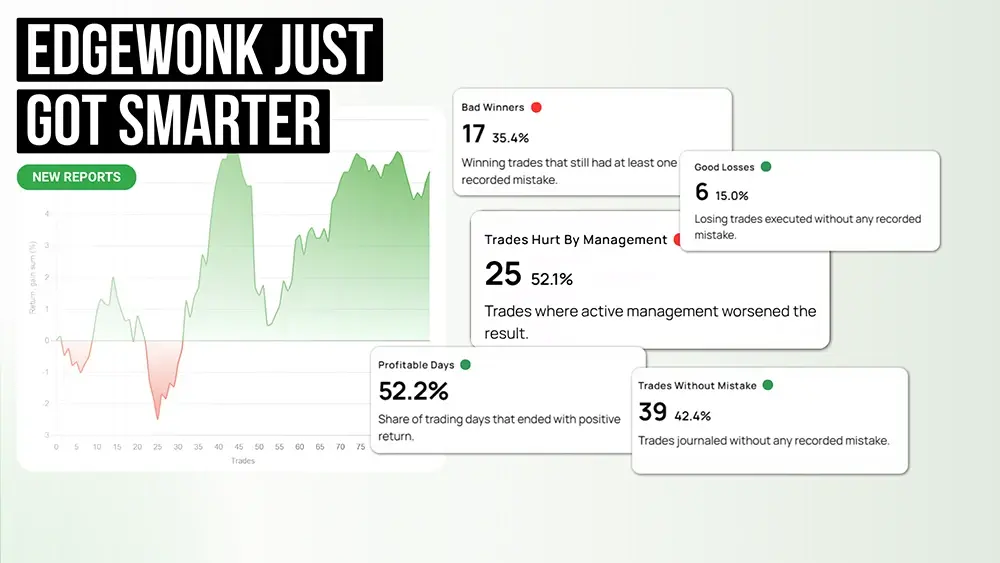
This week, Edgewonk received one major upgrade.
6 min read
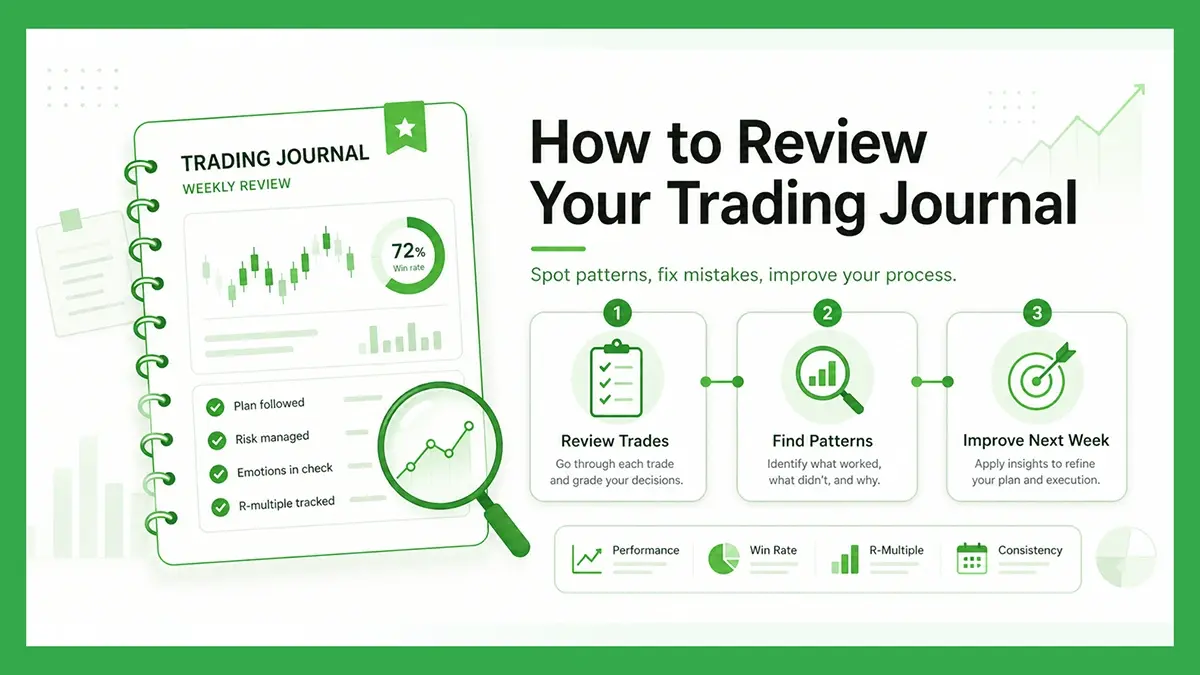
Most traders know they should keep a trading journal. But journaling alone does not improve your trading.
The real improvement happens when you review your journal, find patterns in your behavior, and turn those insights into concrete changes. Many traders record their trades but never look back at the data. They collect information, but they do not use it.
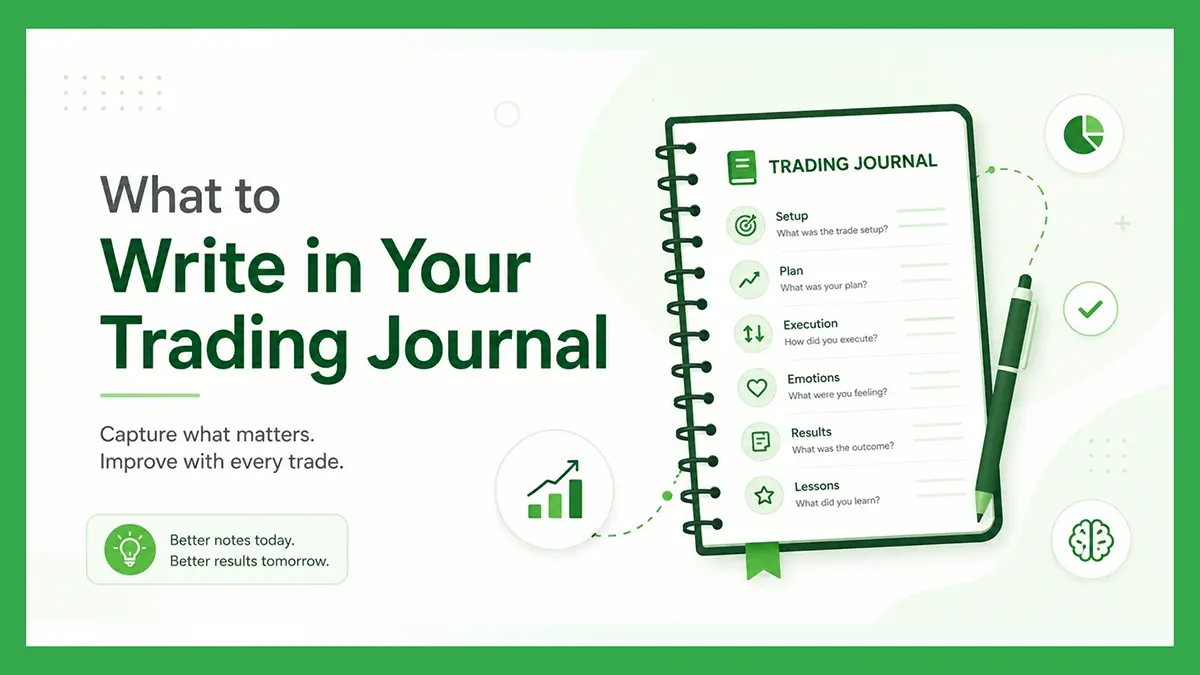
If you are not sure which trade details are worth tracking, start with our guide on what to write in your trading journal before building your review routine.
A trading journal only becomes useful when you review it consistently and ask the right questions. The goal is not just to record trades, but to get actionable feedback based on your own behavior, decisions, and trading approach.
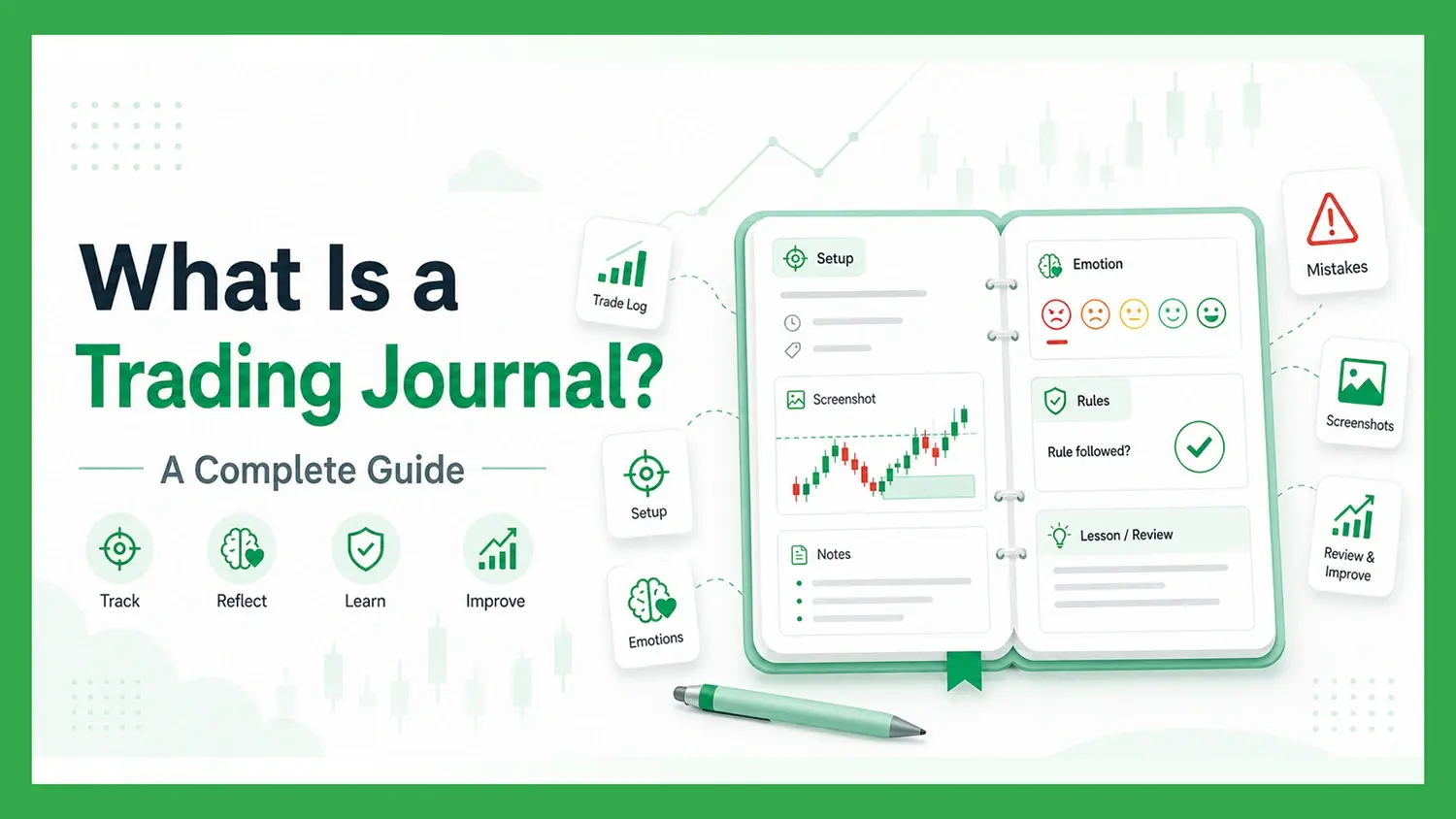
If you are still building your journaling process, start with our complete guide to keeping a trading journal before moving into the review framework below.
In this article, we will walk through a simple weekly trading journal review process you can repeat.
A trading journal records what happened.
A journal review explains why it happened.
Without a review process, traders often repeat the same mistakes without noticing them. They keep chasing weak setups, cutting winners too early, moving stops emotionally, or trading during poor market conditions.
Your trading journal is not just a storage place for trade data. It is a feedback system. The review process is where that feedback becomes useful.
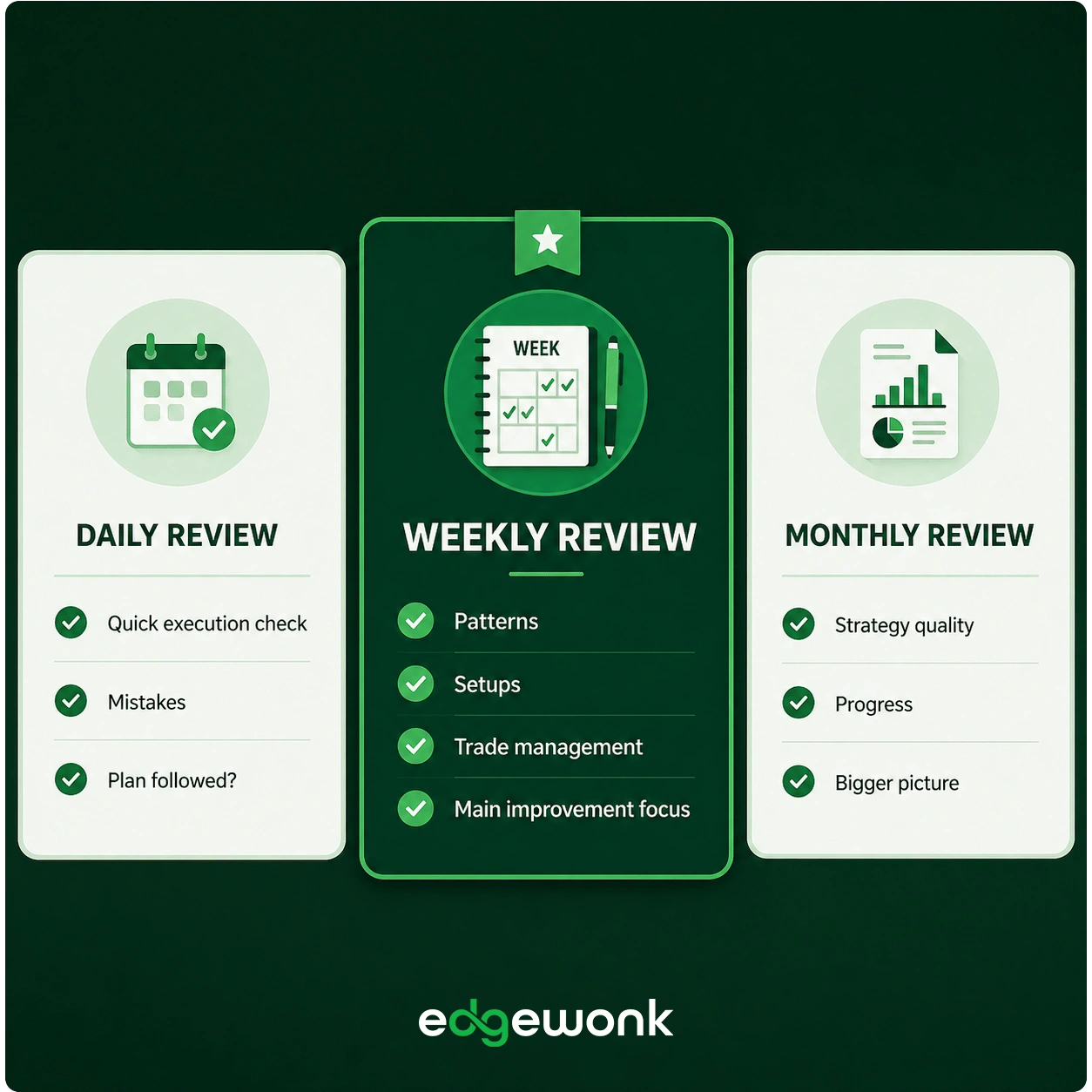
You do not need to perform a deep review after every trade. But you should have a clear review rhythm.
A daily review can be short. After your trading session, check whether you followed your plan, whether your trades were valid, and whether any obvious mistakes occurred. The goal here is to be able to spot negative patterns early before they wreck more havoc.
A weekly review should be your main review. This is where you look for patterns in your setups, trade management, mistakes, timing, and overall performance. The goal is to set one clear impulse for positive change.
A monthly review gives you the bigger picture. Here, you can evaluate whether your strategy is improving, whether your weekly goals are working, and whether your trading process is moving in the right direction.
For most traders, the weekly trading journal review is the best starting point.
Start with the big picture before you look at individual trades.

Look at your R-multiple result. Did your total R drop because your winners became smaller? Or because your losers became larger? If you see changes here, you can keep digging later during the review.
Check your win rate. Did your setups behave worse than usual, or was execution the real problem?
Compare your average winner and average loser. This helps you understand whether your risk and reward profile is still healthy. It also allows you to assess your risk management right away.
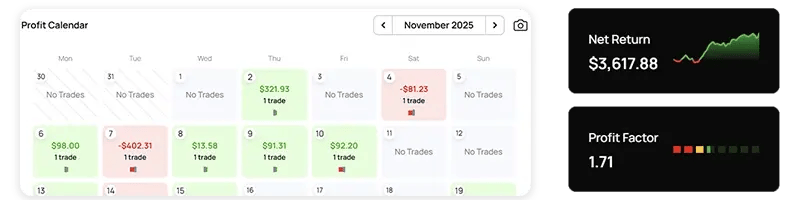
Finally, look at your profit factor. It gives you a quick impression of the quality of your system during the review period.
The better question is not, “Did I make money?” The better question is, “Was my performance the result of good trading decisions?”
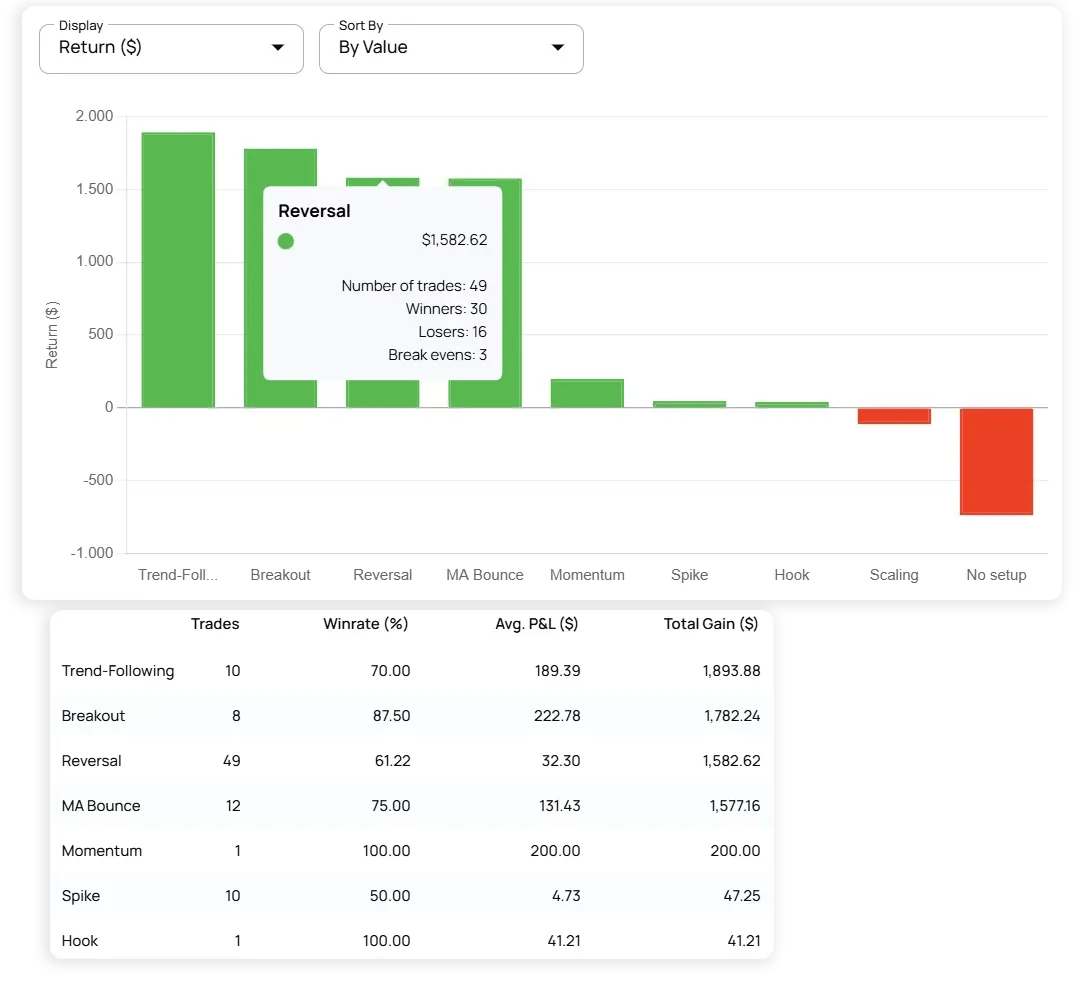
Many traders treat all trades equally. But your journal will often show that only a small number of setups produce most of your best results.
During your weekly review, ask:
If one setup underperformed, ask why. Was the setup itself weak? Did I make execution mistakes? Was the market condition wrong? Did you enter too late? Did you manage the trade poorly?
This step helps you become more selective. You may find that one setup deserves more focus, while another setup should be reduced, improved, or removed from your plan.
At the end of the review identify one thing you can improve about your setup selection next week.
Trade management is one of the areas where traders often have the most room for improvement.
A trade may start with a good idea, but the final result depends heavily on how the trade is managed. This is why your review should look at the difference between the original trade plan and the actual managed outcome.
Ask yourself:
A good trading journal review should show whether your trade management added value or quietly reduced your edge.
This is especially important because many traders do not lose money because of bad entries alone. They lose money because they interfere with good trades, cut winners too quickly, or give losing trades too much room.
In Edgewonk, go to Chart Lab > Trade Management and analyze the Trade Management Feedback box at the bottom of the screen. This can help you see whether your decisions after entry improved or damaged your performance.

Next, review your trading quality.
This part is not about judging yourself emotionally. It is about identifying repeated behavior patterns that cost you money.
Common mistakes include entering too early, chasing price, ignoring the stop loss, moving the target too far away, trading outside the plan, taking low-quality setups, overtrading after a loss, or closing trades emotionally.
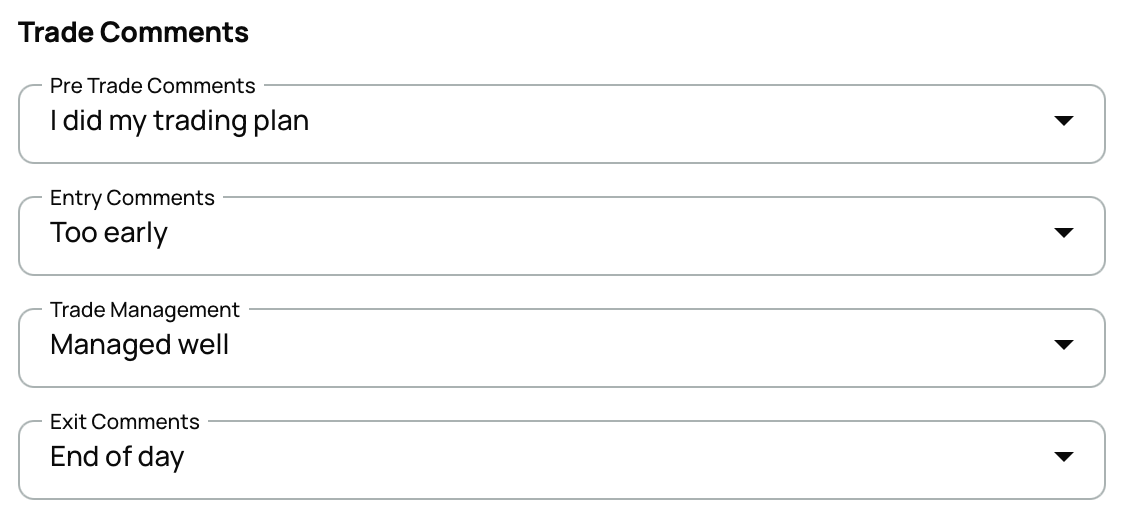
This makes your review more actionable. If ten trades had mistakes, but seven of them were entry-related, you now know where to focus.
In Edgewonk, go to Chart Lab > Trade Comments and review your different comment categories. Look for outliers that show your biggest weaknesses.
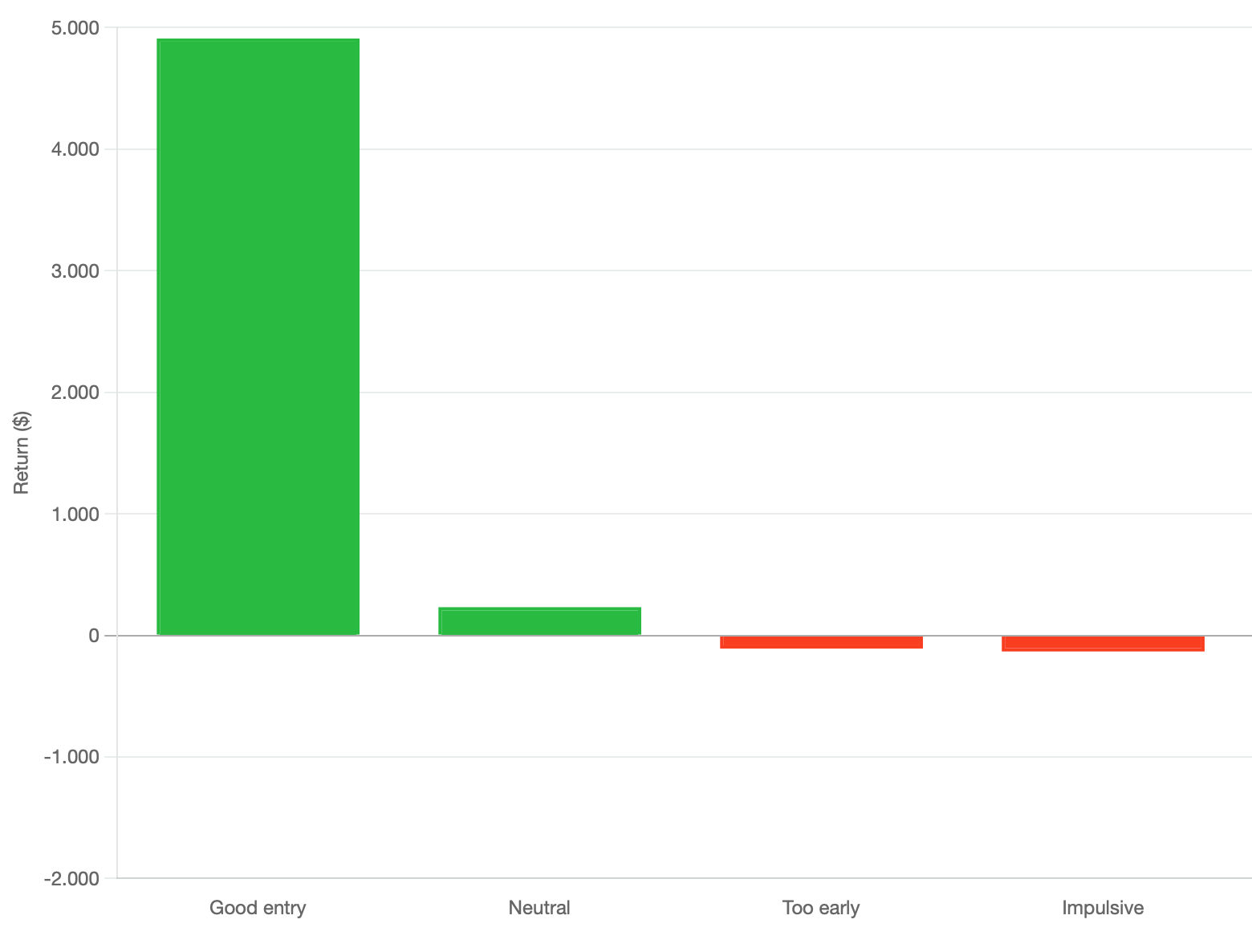
Your goal is to find the one mistake that caused the most damage this week. That mistake becomes your improvement focus for the next week.
A trading strategy does not perform equally in every environment.
Some traders perform best during the market open. Others perform better later in the session. Some setups work well in trending markets but fail in choppy conditions. Some instruments may suit your strategy better than others.
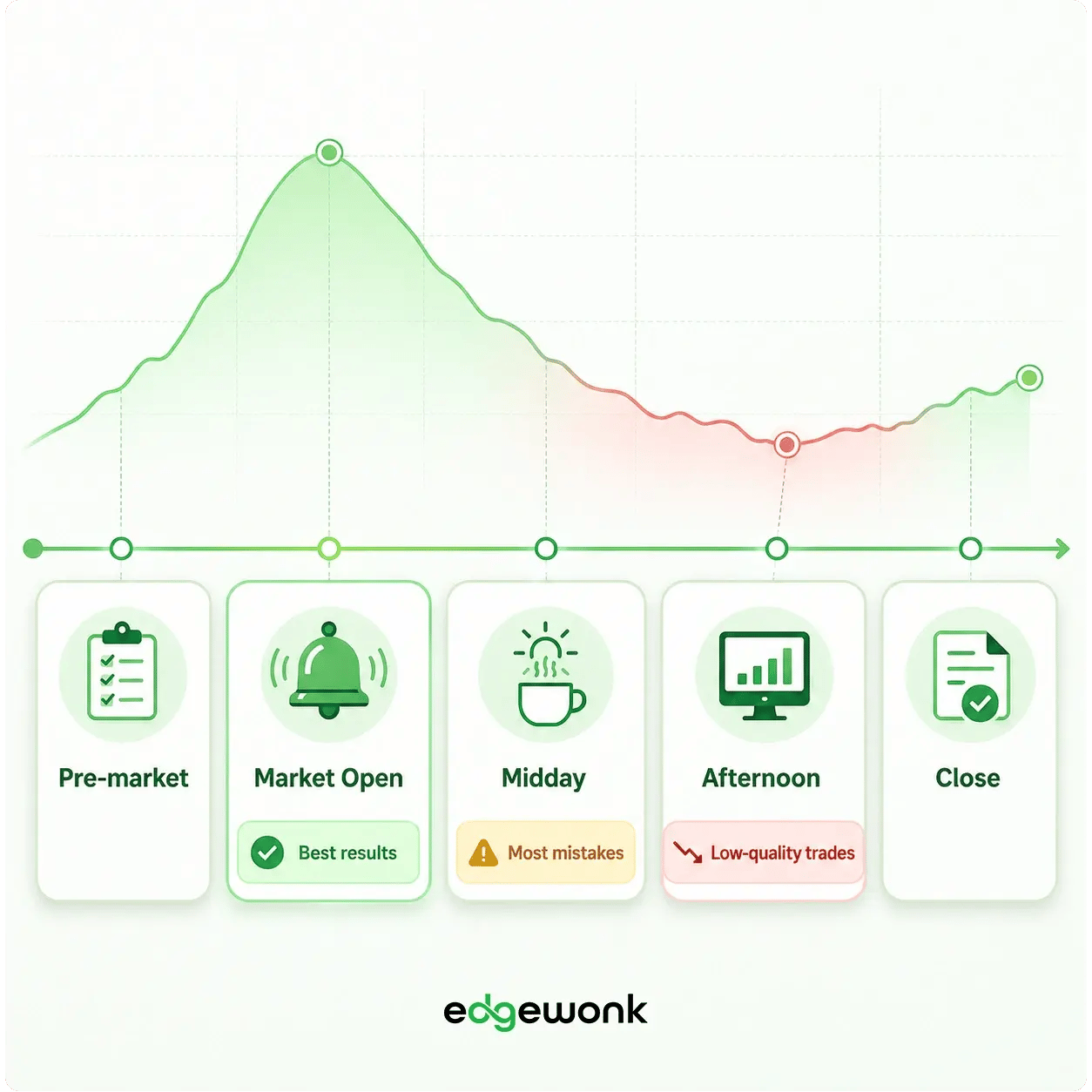
During your review, ask which market session produced the best results, which time of day caused the most mistakes, whether results were better in trending or ranging markets, whether news events affected performance, and whether certain instruments performed better than others.
This helps you understand where your edge actually appears.
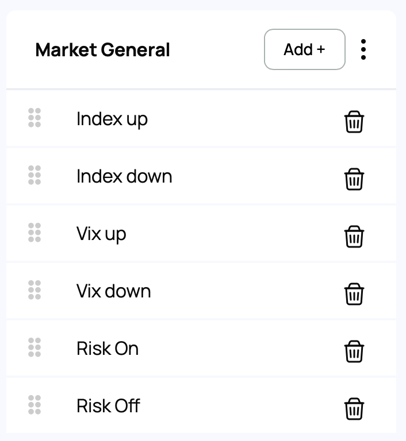
In Edgewonk, you can use Custom Statistics to track the general state of the market. Over time, this can help you identify the conditions where your strategy performs best and the environments you should avoid.
A trading journal review should not end with ten vague goals.
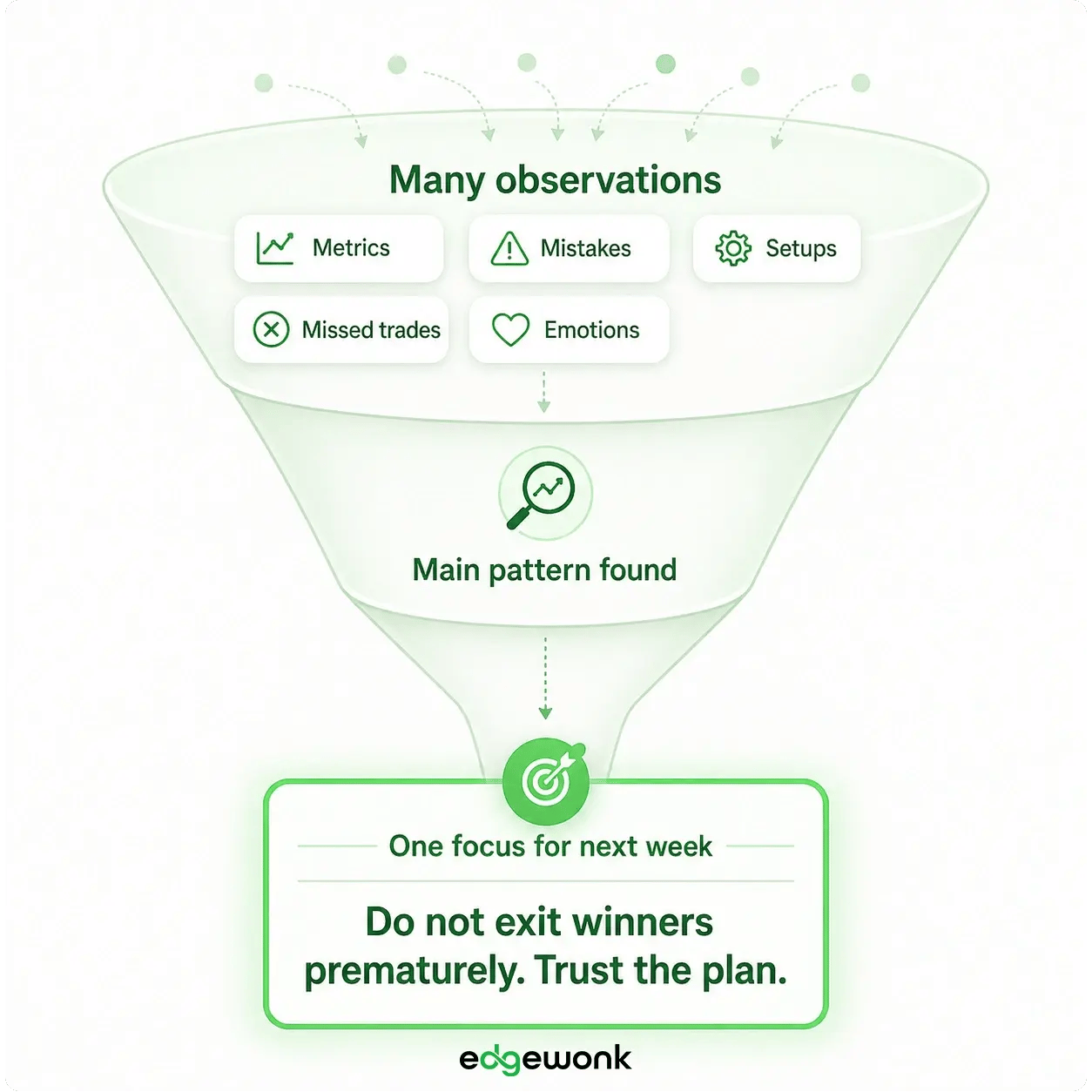
If you try to fix everything at once, you usually fix nothing. The better approach is to end every review with one clear action item.
For example:
The goal of a trading journal review is not to collect more information. The goal is to change one behavior that can improve future results.
Keep the action item simple, measurable, and realistic. Then review it again next week.
Missed trades are often ignored, but they can reveal important problems in your trading process.
If you miss many valid setups, your journal may not show the real edge of your system. Your recorded trades only show the trades you actually took. They do not show the trades you avoided, missed, hesitated on, or failed to prepare for.
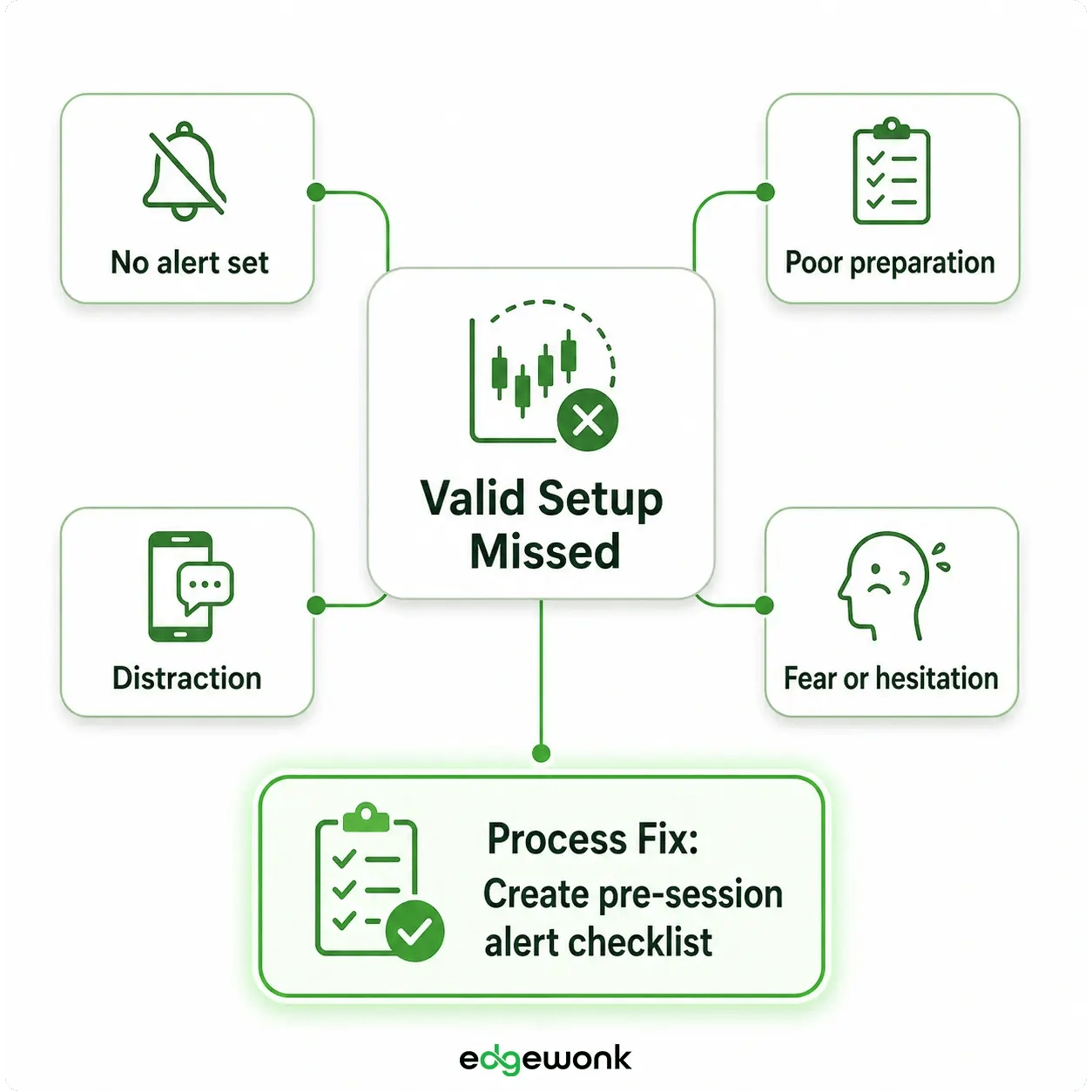
During your review, ask which valid setups you missed and why. Was it a preparation issue? Did you forget to set alerts? Were you distracted? Did you hesitate because of fear?
In Edgewonk, go to your Missed Trades journal section and review the trades you did not take. Look for patterns and define one process improvement for the next week.
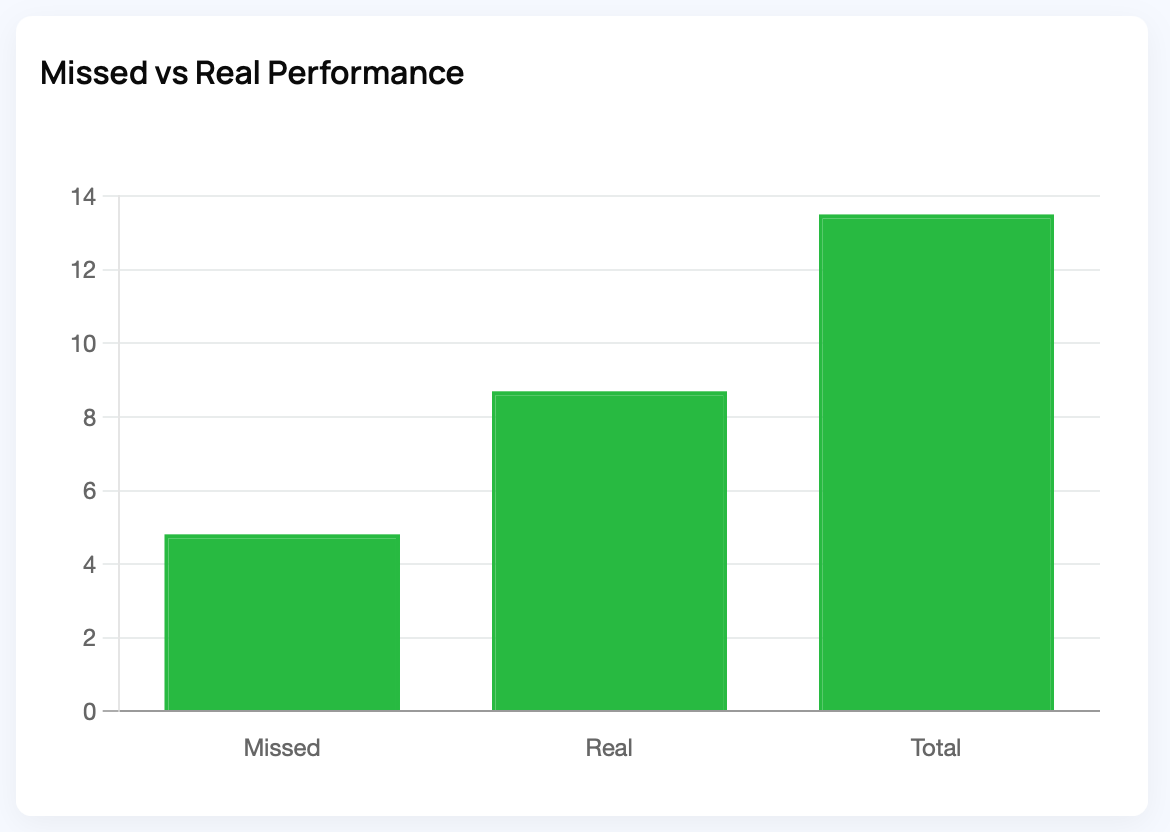
Use this checklist during your weekly review:
This checklist keeps your review structured and prevents you from jumping randomly between charts, statistics, emotions, and conclusions.
A trading journal review should not disappear once you close your charts.
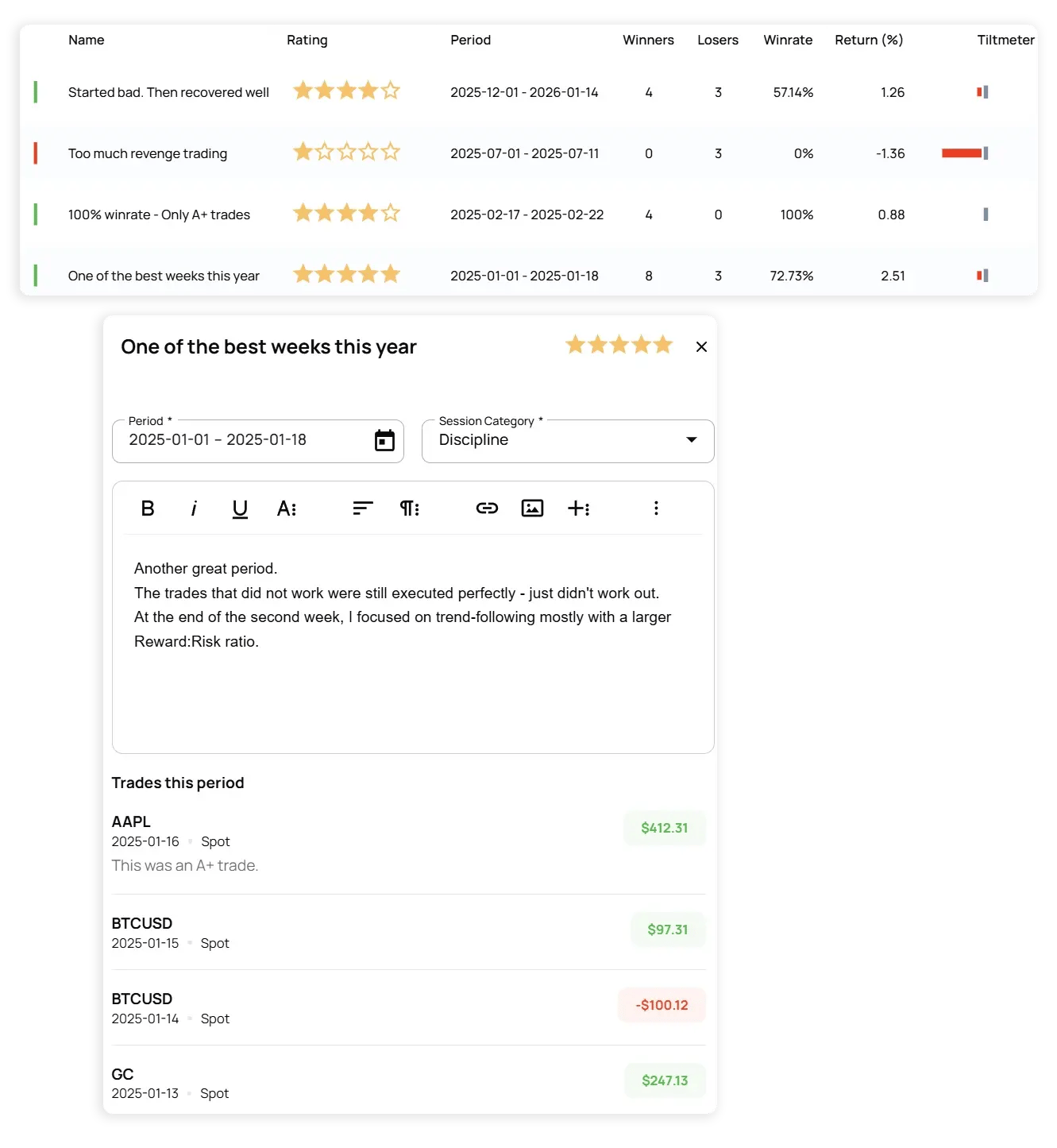
The most important findings should be written down, summarized, and compared over time. This turns your review into a periodic trading report card.
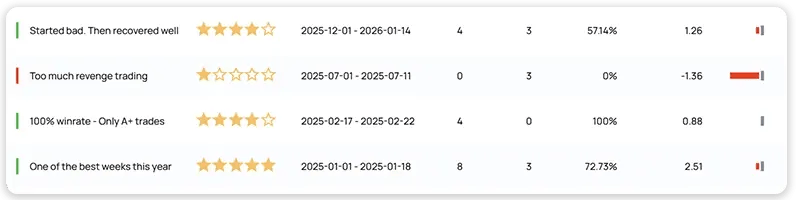
In Edgewonk, the Sessions feature is designed for exactly this purpose. You can create regular review sessions where you summarize your performance, record key findings, document repeated mistakes, highlight improvements, and define the next focus area.
If you want to use Edgewonk to structure your reviews, analyze your trading patterns, and save your weekly or monthly findings in one place, you can view the available Edgewonk plans here.
A good session report can include what went well, what went wrong, which setups performed best, which mistakes repeated, whether trade management helped or hurt, and what you want to improve next.
Over time, these session reports create a timeline of your development as a trader.
Recording trades gives you data.
Reviewing trades gives you insight.
Acting on the review creates improvement.
Your trading journal becomes valuable when you use it to understand your behavior, identify patterns, and make better decisions in the future.
A dedicated trading journal like Edgewonk can make this process easier by helping traders analyze setups, mistakes, trade management, emotions, missed trades, and performance patterns in one place. And with the Sessions feature, you can save your weekly or monthly findings as structured report cards and track your development over time.
This week, Edgewonk received one major upgrade.
Many traders think of journaling as extra admin work after the trade is already over. But a good trading journal is not just a place where you store...
A trading journal is one of the most important tools a trader can use to improve their performance. It helps you record your trades, review your...